
Most home remodeling ideas start in the wrong place. They start with a room. The kitchen you have stopped cooking in, or the bathroom that never stopped leaking. You fix that room, you move on, and two years later the house still feels like four houses stitched together.
The project in these photographs took the opposite route. Before a single cabinet was ordered, the palette was settled: walnut, marble, brass and terrazzo. Every room that got touched used some combination of those four. Nothing else was allowed in.
The result reads as one house. Not because every room matches, but because every room is speaking the same language. Below is how that played out space by space, along with the home remodeling ideas you can lift straight into your own project.
Why most home remodeling ideas fall apart
Remodels rarely fail on craftsmanship. They fail on accumulation. Most home remodeling ideas are perfectly sound in isolation. The trouble starts when you add them all up.
You choose a quartz for the kitchen in March. In August you fall for a porcelain in the bathroom showroom. By the following spring the powder room gets a third stone because it was on sale. Each decision was defensible on its own. Together they produce a house with no point of view.
A material palette stops that drift. It is a short, written list of the finishes your house is allowed to use, agreed before demolition. Once it exists, every later decision gets easier, because the question changes. You stop asking do I like this? and start asking does this belong here?
That second question has an answer. The first one never does.
The short version:
- Pick four materials, not forty.
- Give each one a job: warmth, pattern, metal, floor.
- Repeat them in different proportions room to room.
- Shift the palette in wet rooms, but never abandon it.
The four-material rule
Four is not arbitrary. It is roughly the number of finishes the eye can register as a deliberate set before the room starts to read as noise.
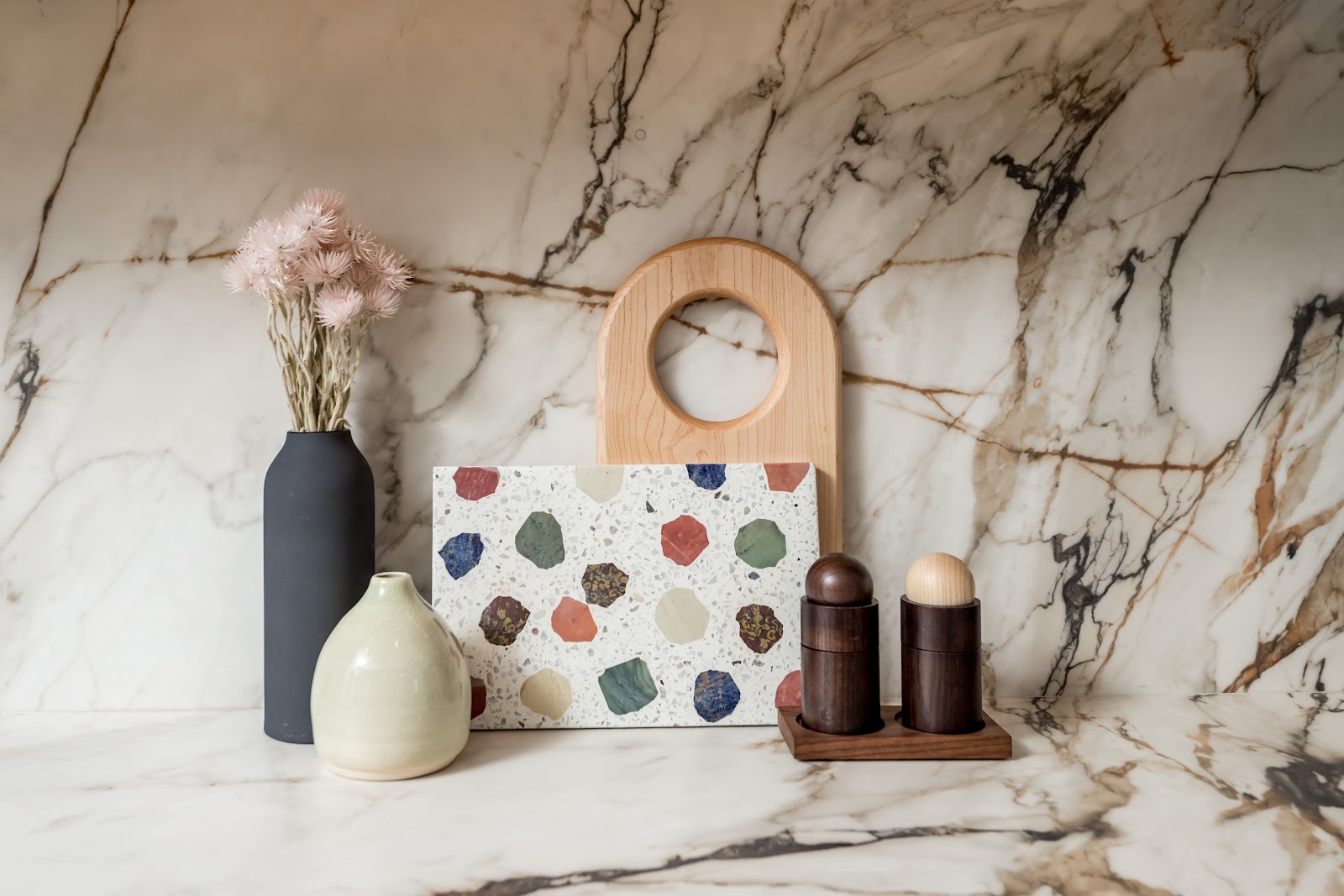
In this house the four broke down cleanly. Walnut carried the warmth. Marble carried the pattern. Brass carried the metal. Terrazzo carried the floor and wall tile in wet rooms. Everything else — paint, plaster, glass, the matte black of the window frames — functions as background rather than as a choice competing for attention.
Notice what is not on that list. There is no second wood, no second metal, no feature tile fighting the marble. The restraint is the idea. Of all the home remodeling ideas on this page, this is the one worth stealing first.
The kitchen is where the palette gets tested
If a palette is going to break, it breaks in the kitchen. It is the room where home remodeling ideas either prove themselves or quietly collapse. Kitchens carry more materials per square foot than any other room: cabinetry, stone, metal, appliances, flooring and lighting all meet in one sightline.
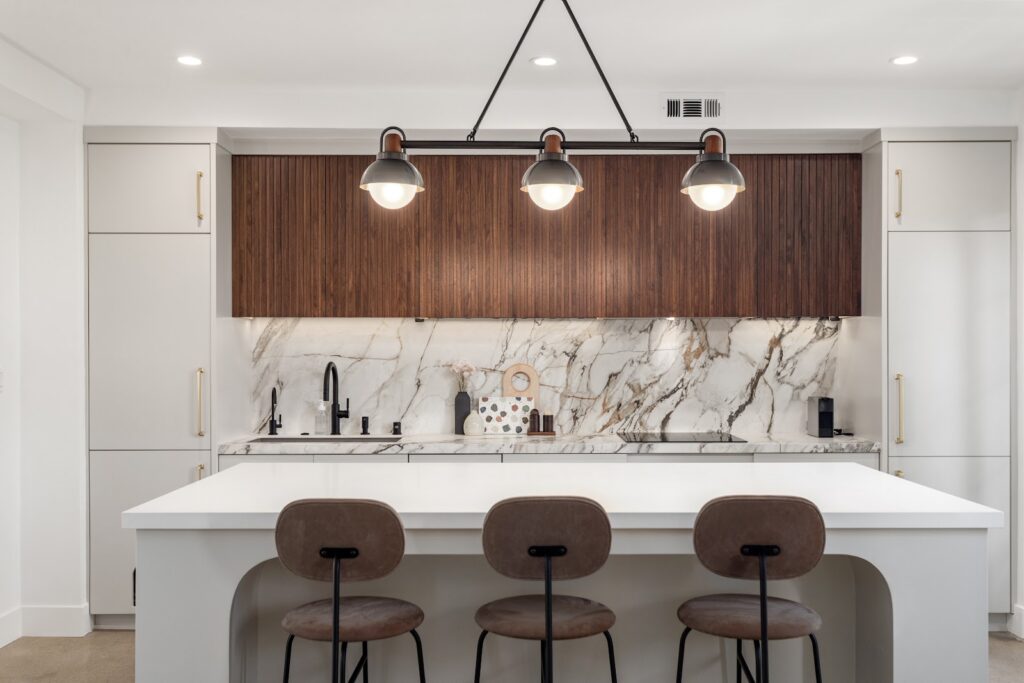
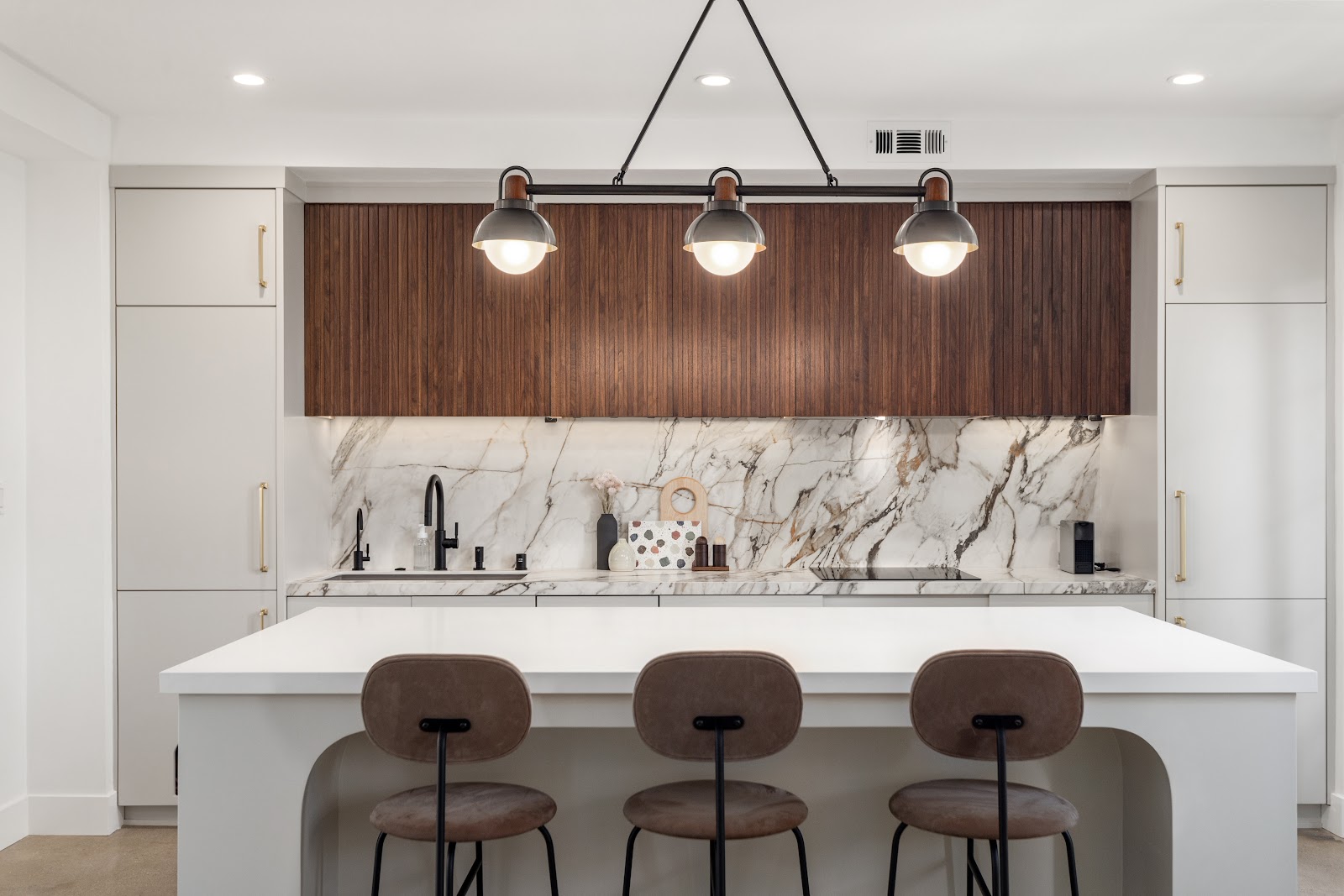
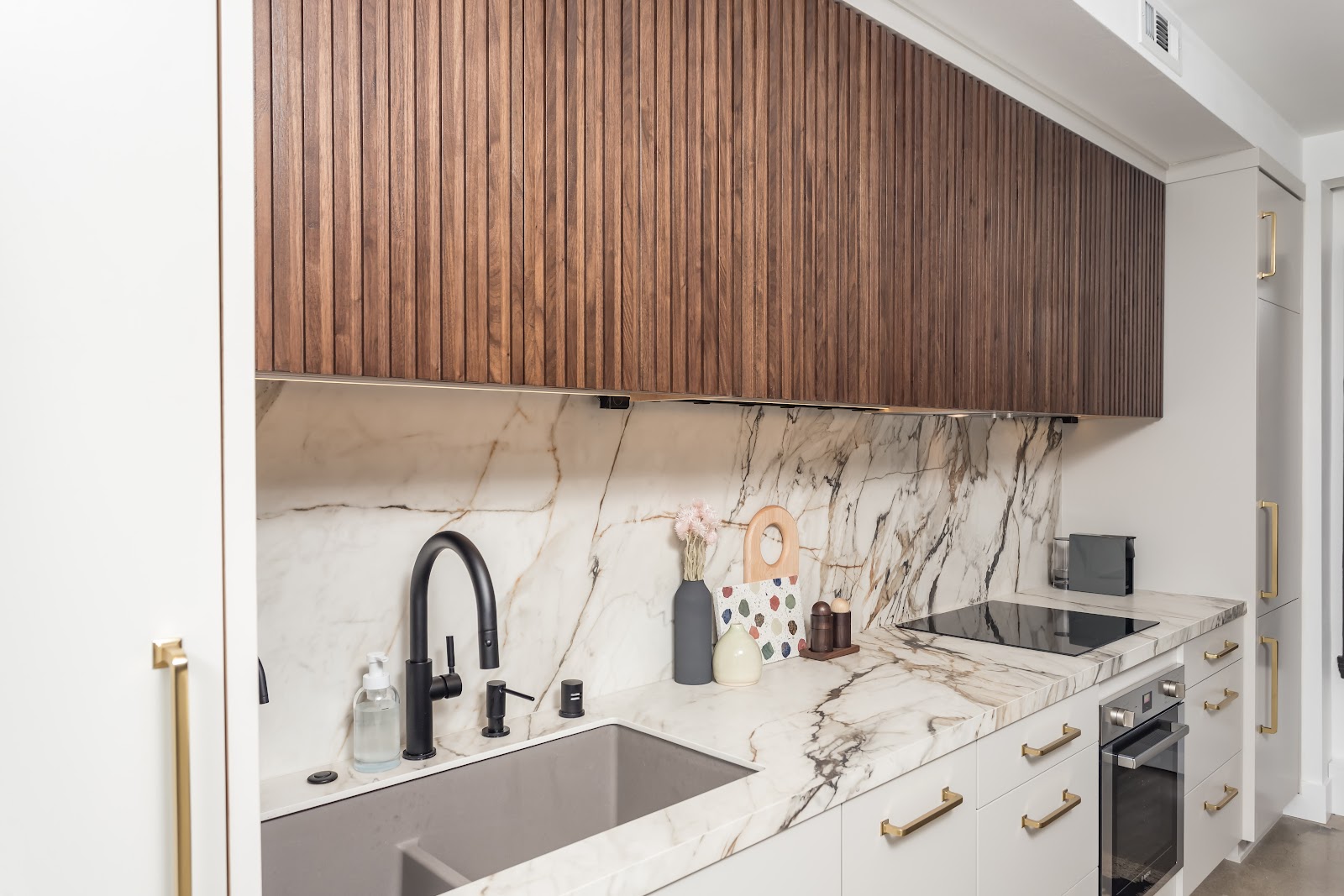
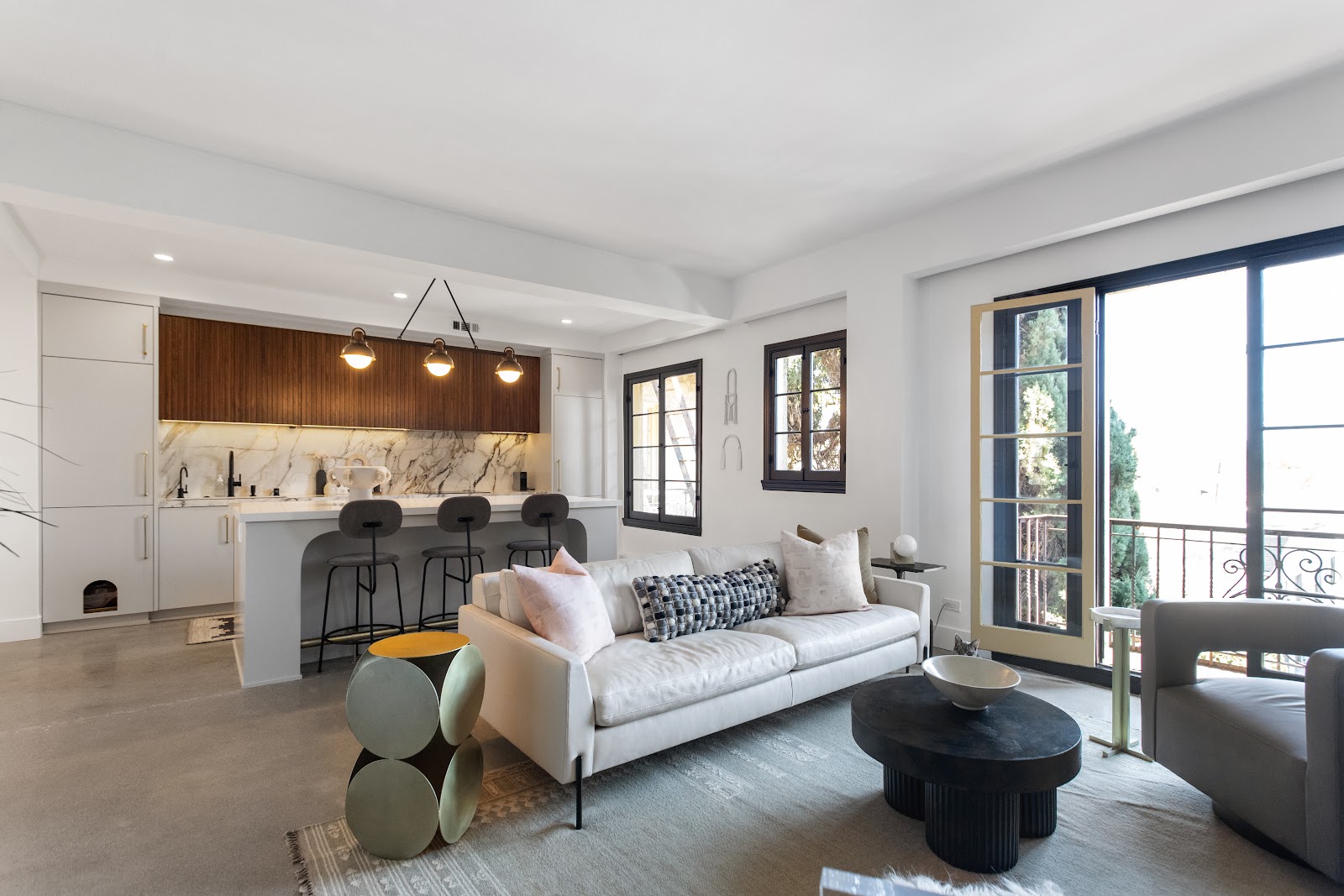
Here the walnut appears as fluted upper cabinetry, run in a continuous band so the grain reads as one gesture rather than a row of doors. Below it, the marble runs full height as a slab rather than a tiled backsplash. That single decision does most of the work. A slab has no grout lines to interrupt the veining, so the stone behaves like a panel of artwork instead of a surface.
The lower cabinets are deliberately quiet — flat, pale, unremarkable — because something in the room has to recede. Brass bar pulls supply the metal. The faucet goes matte black, picking up the steel window frames rather than fighting the brass.
Let the working spaces repeat, not compete
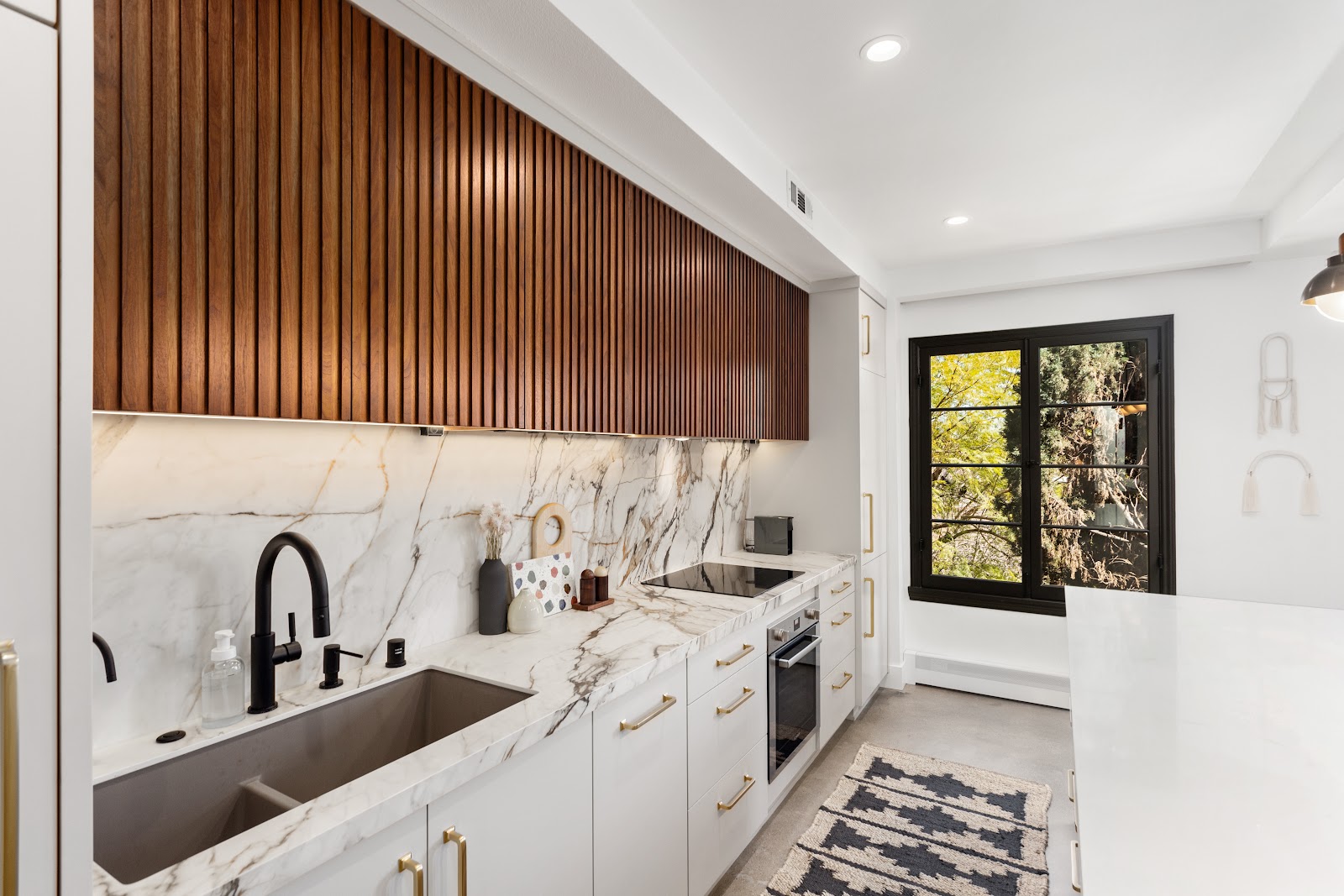
Butler’s pantries, galley runs and prep corridors are where good home remodeling ideas usually get abandoned. They are secondary spaces, so they get a cheaper spec, and the break in quality is visible the moment you walk through the door.
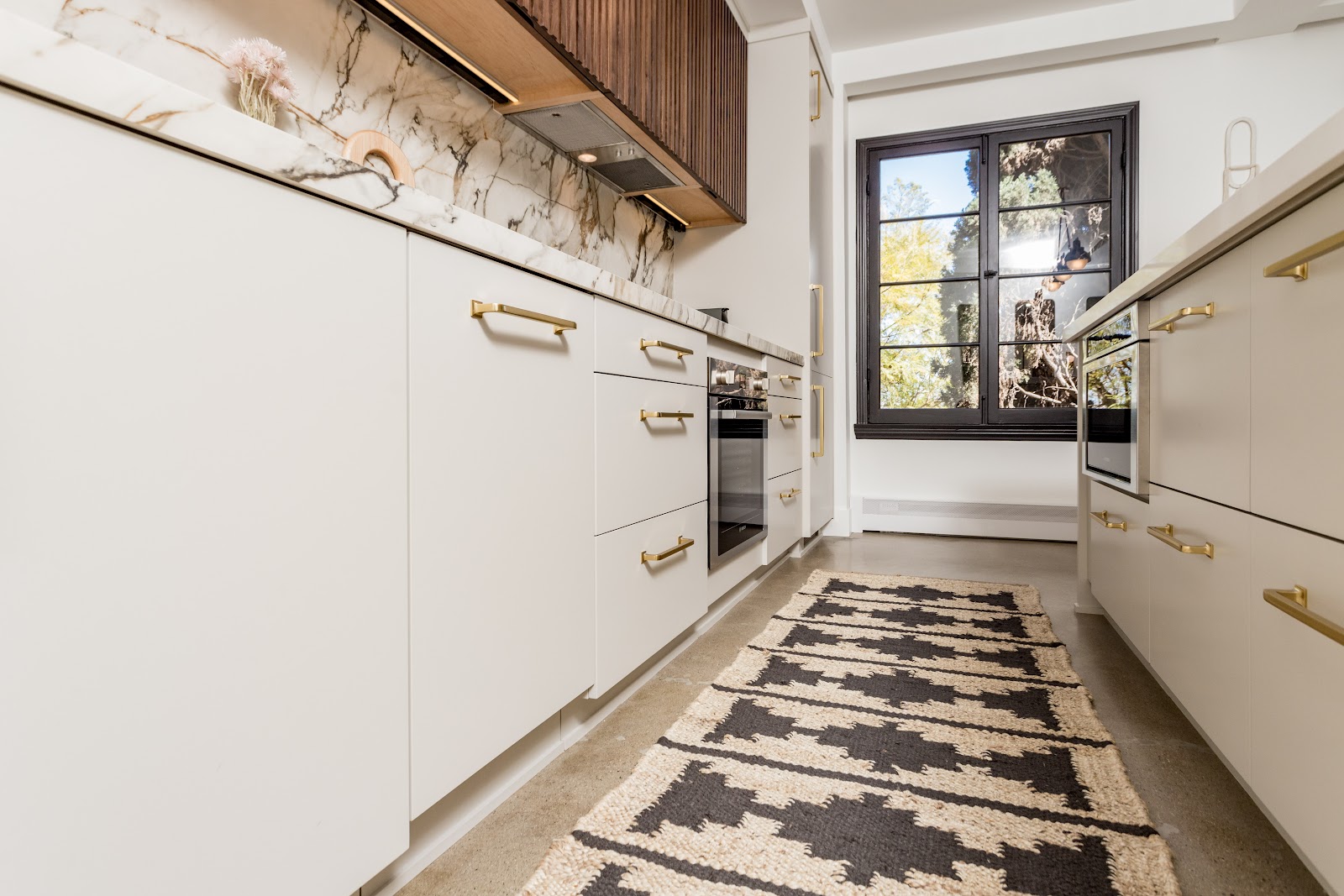
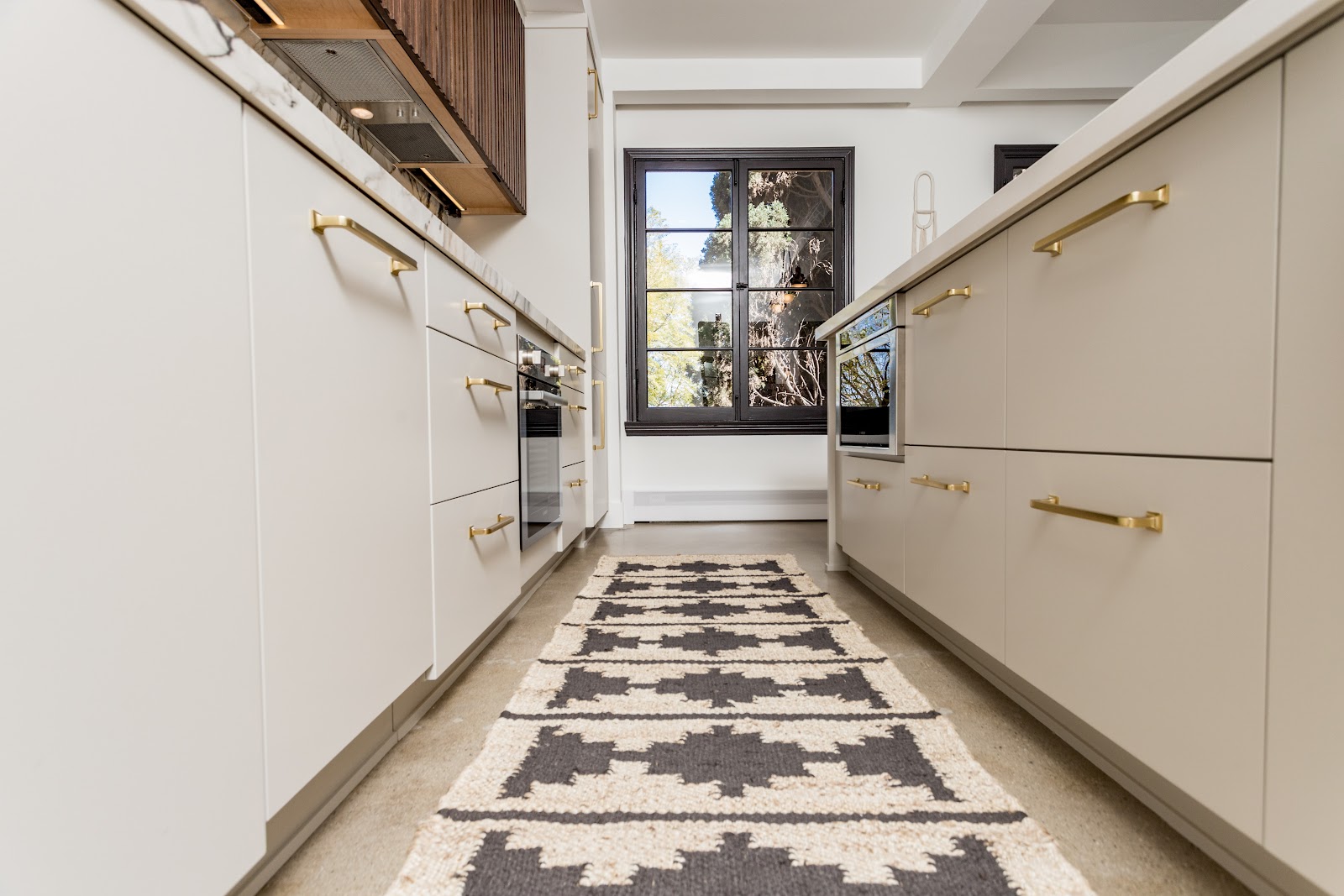
The approach here was to repeat the palette at a lower volume. The cabinetry continues in the same pale finish. The marble returns as counter and short backsplash rather than full height. The brass pulls get longer, which turns ordinary drawer fronts into something closer to joinery.
Because the materials are identical, the corridor does not announce itself as a lesser space. It simply reads as the same house, continuing.
This is also where hardware earns its cost. Pulls are touched more than any other element in a remodel, so the weight and finish of them is one of the few places where spending more produces a difference you feel daily rather than only see.
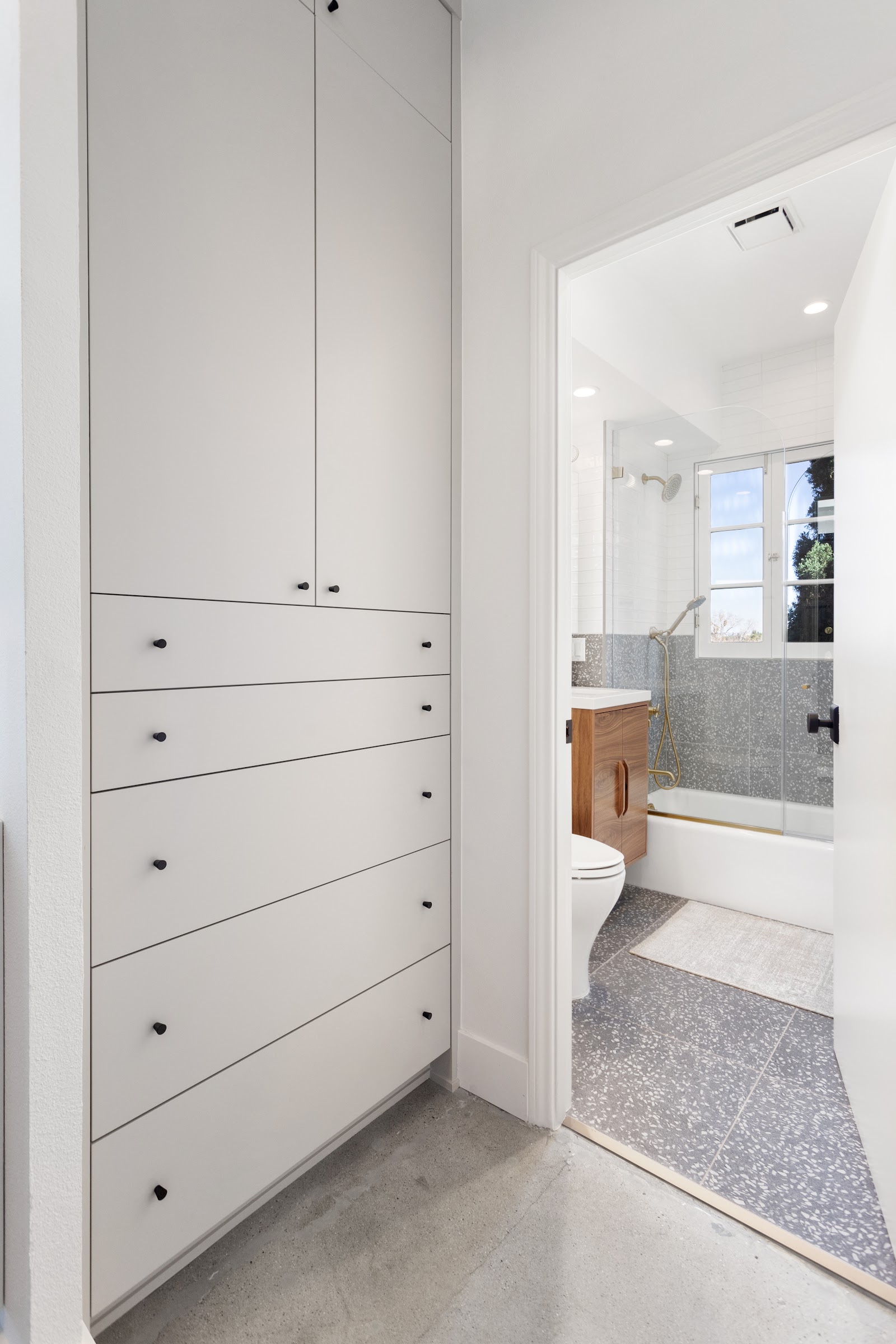
Bathrooms are where you can shift the palette
A palette should not be a prison. Bathrooms are the right place to let it move, because they are experienced one at a time rather than in a single sweep. Among home remodeling ideas for small bathrooms, the next one does the most work for the least money.
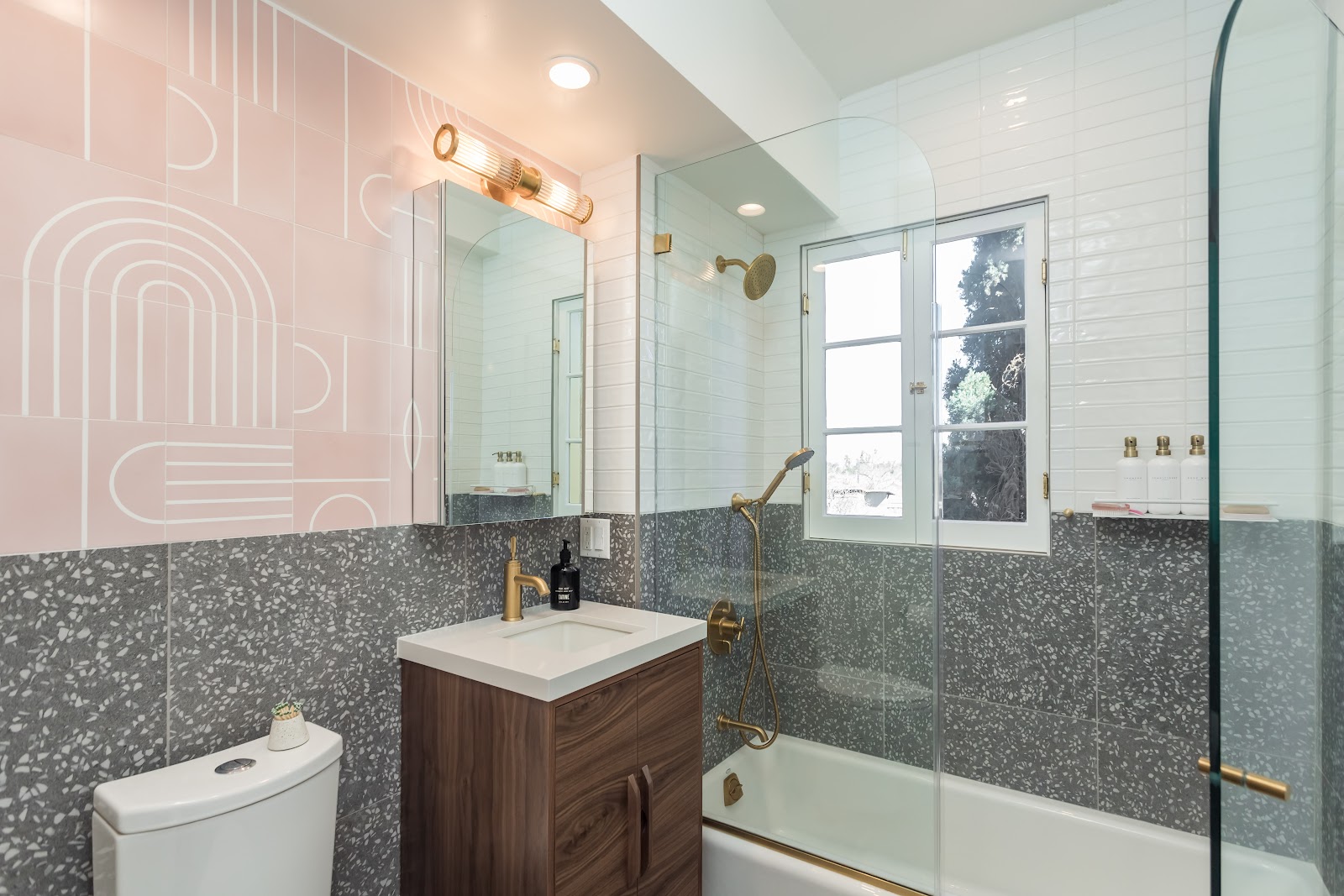
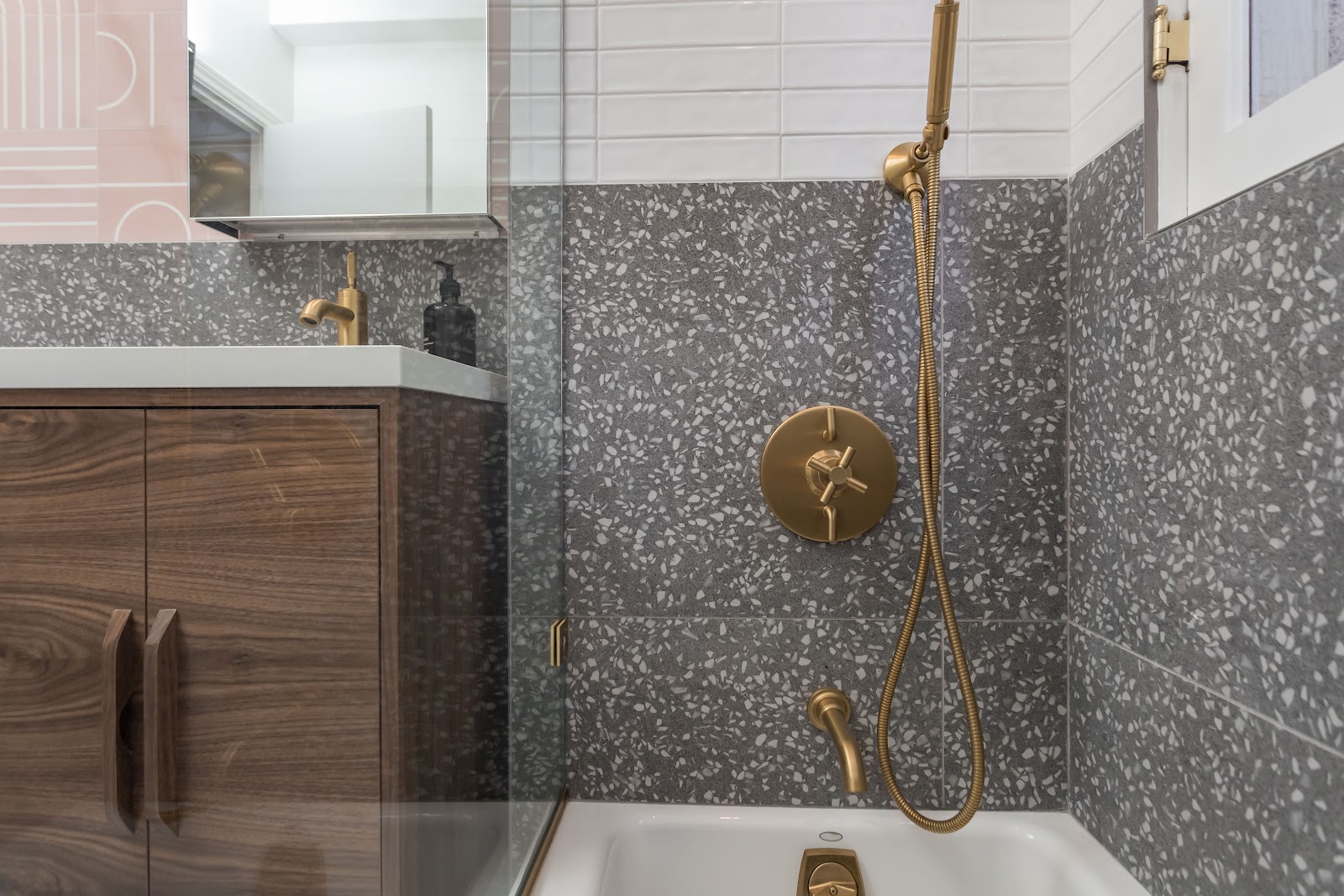
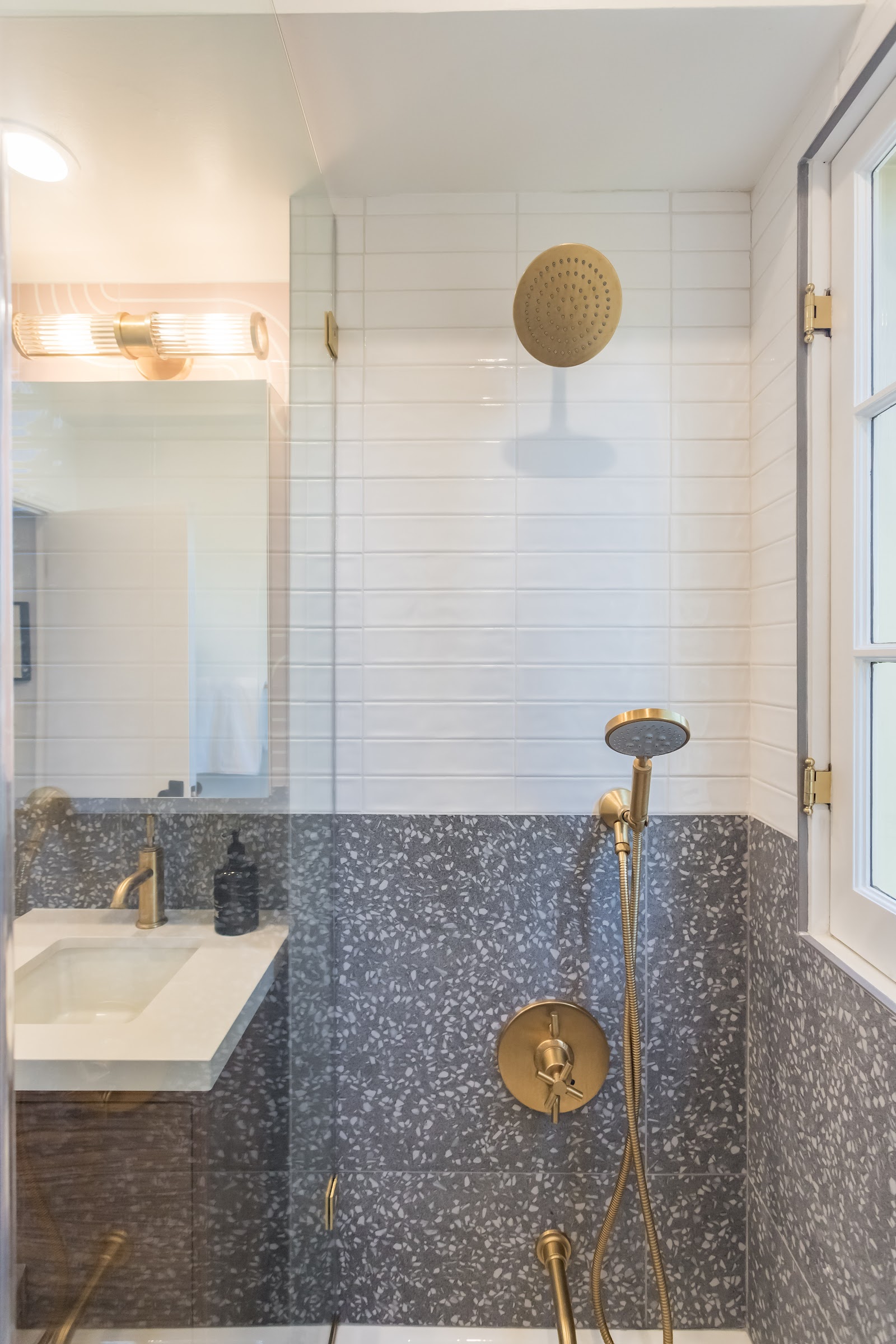
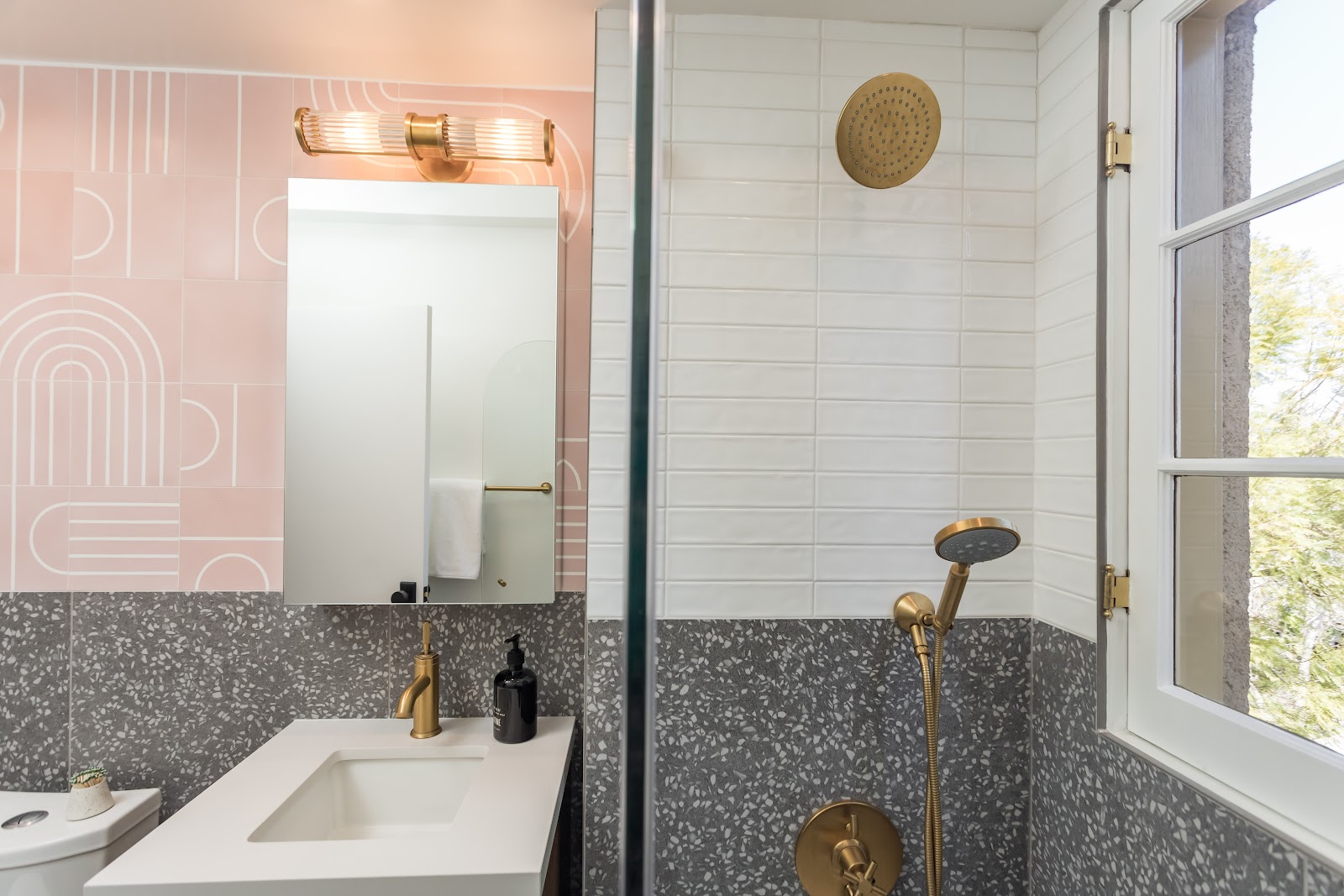
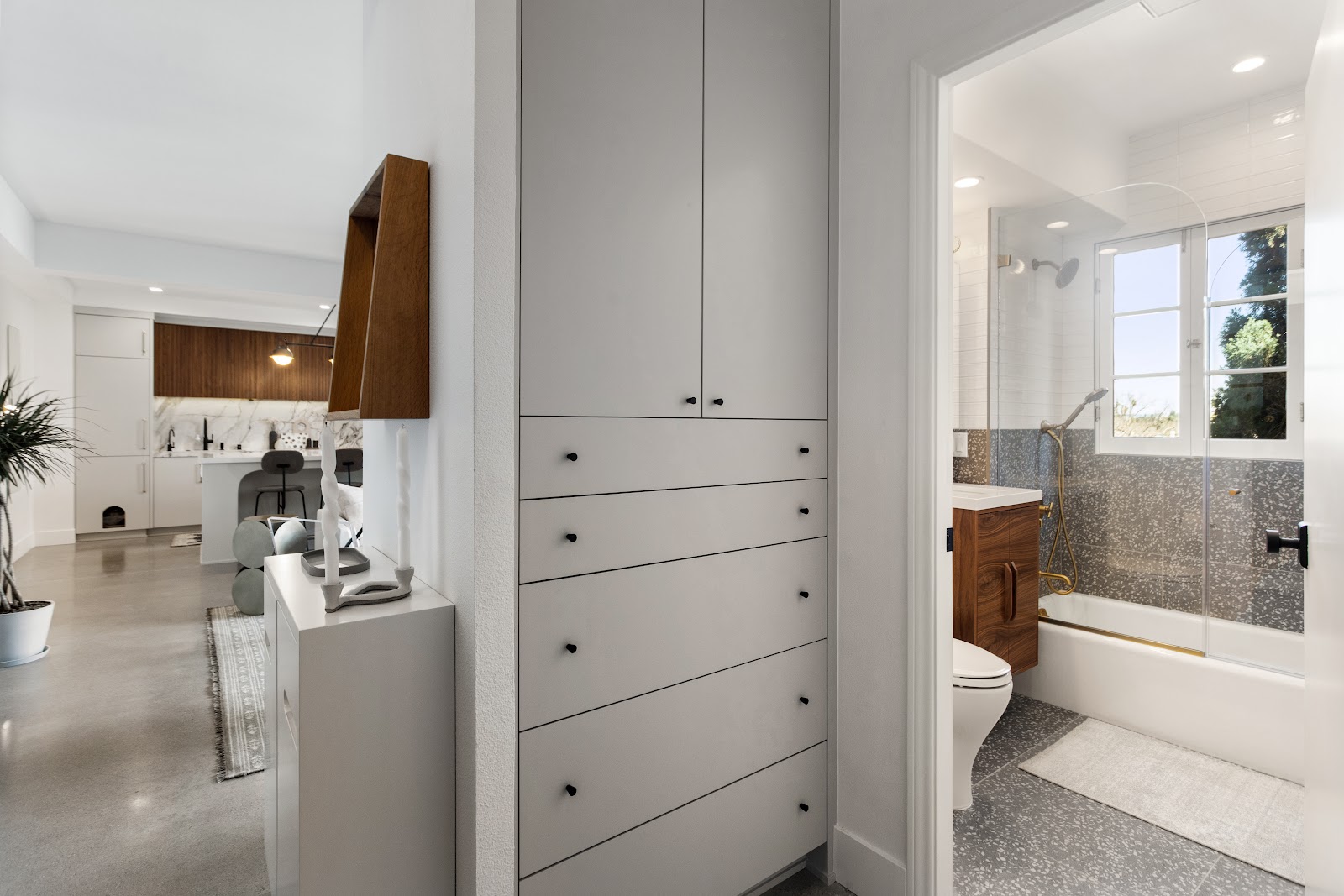
So the marble steps back and terrazzo takes over. It runs as a wainscot to roughly shoulder height, wrapping into the shower and tub surround, which gives the room a horizontal line that makes a small bathroom feel wider than it is. Above that line the walls lighten — a soft blush tile with a low-relief arch pattern in one room, plain white in another.
Walnut returns as a floating vanity, so the warmest material in the house is also present in its smallest rooms. Brass carries through on every tap, shower set and sconce.
Two of the original four are still here. Two have been swapped. That is the correct ratio for a shift: enough change to make the room feel like its own place, enough continuity that it clearly belongs to the same house. If you are weighing the same move, our bathroom remodeling page covers how these decisions get sequenced on site.
Quiet rooms still need a decision
Bedrooms and living rooms are usually left until last, by which point the budget is thin and the instinct is to paint everything white and stop.
That instinct is half right. These rooms should be calmer. But calm is not the same as undecided, and a room with no decision in it reads as unfinished rather than restful.
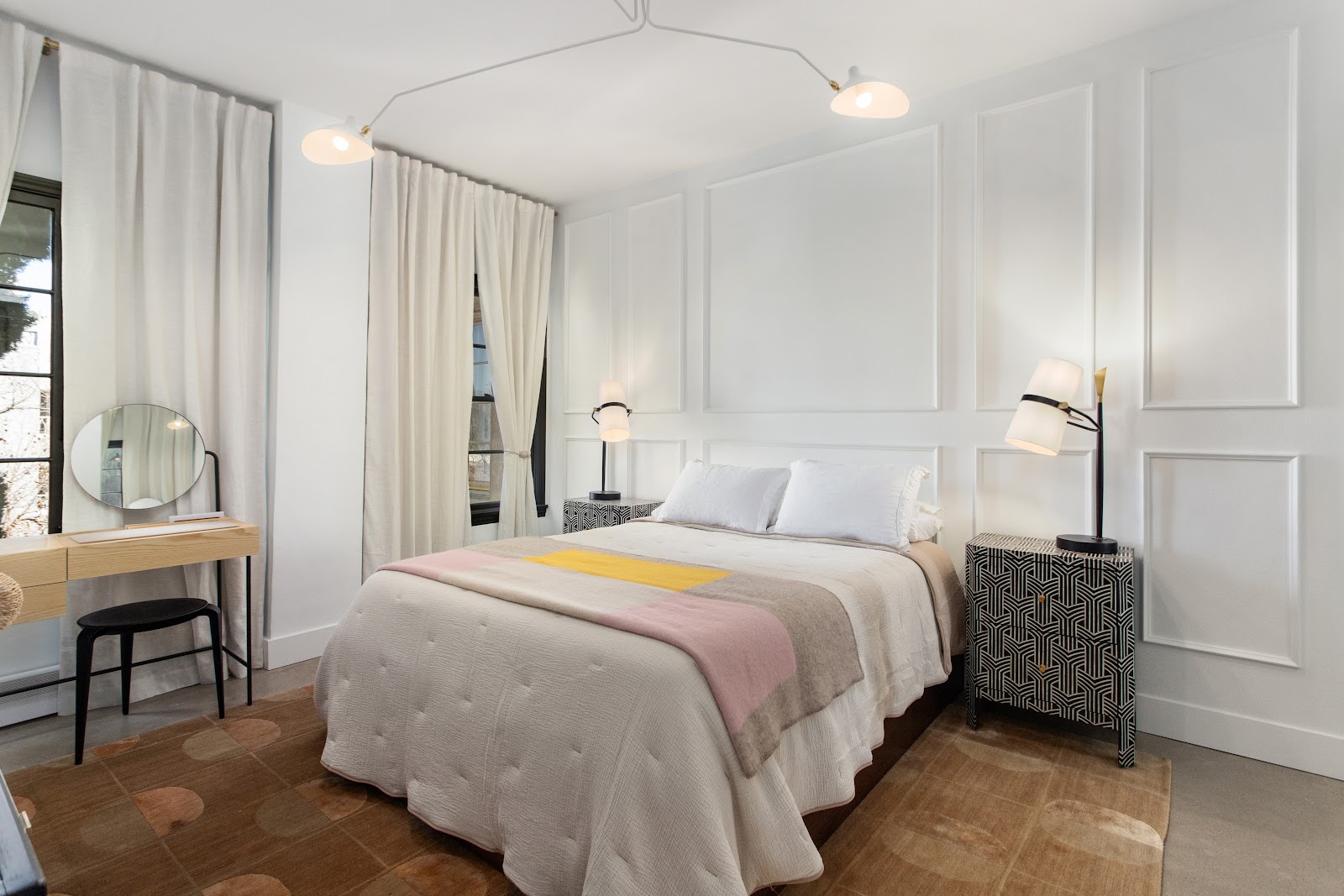
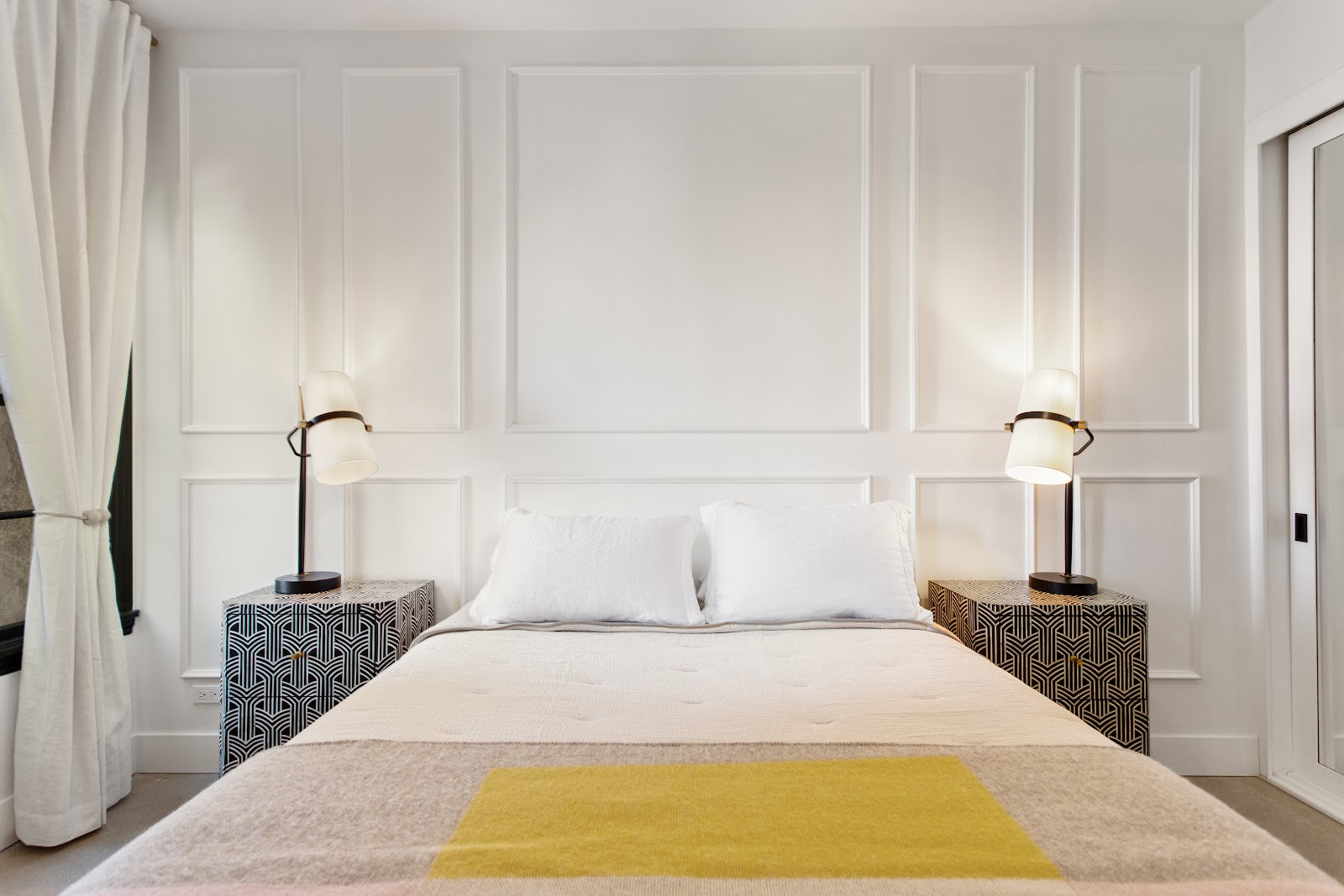
The move here was architectural rather than material. Applied panelling on the bedroom walls creates shadow lines that change through the day, so the room has depth without needing colour or pattern. It costs considerably less than a feature wall of stone and it will still look correct in fifteen years.
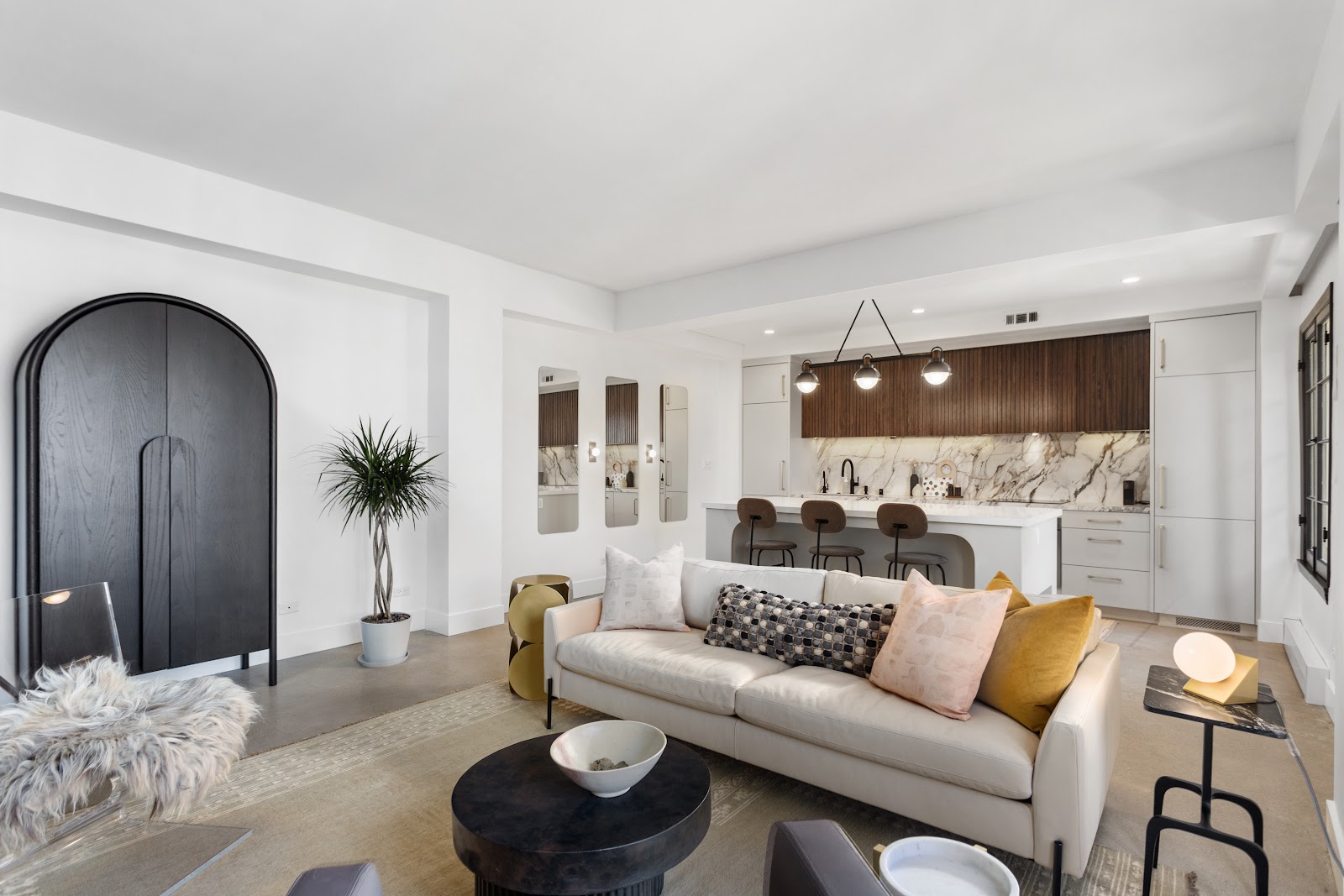
In the living room, a black arched front door does the same job in a single stroke. One strong shape, surrounded by quiet, is almost always better than several competing ones.
How to choose your own four
You do not need this particular palette. You need a palette. Good home remodeling ideas travel well even when the specific materials do not, so here is a practical way to arrive at your own four.
First, pick your warm material. This is usually a wood, and it sets the temperature of the whole house. Walnut here, but white oak, rift oak and ash all behave the same way at different price points.
Second, pick your pattern. One material in the house gets to be loud. Marble, terrazzo, a dramatic quartzite, a handmade tile — one of them, not three. Everything else stays plain so this one can perform.
Third, pick your metal and commit. Mixing metals is possible but it is an advanced move, and it needs a rule behind it. In this house the rule was simple: brass for anything you touch, black for anything structural.
Fourth, pick your floor. It appears in every room, so it is the quietest and most consequential choice on the list.
Then write the four down and take the list to every showroom. When something beautiful appears that is not on it, the answer is no — unless you are prepared to go home and change the list properly.
One practical footnote on the stone. Marble is a calcite and it will etch where acid touches it, so a slab backsplash behind a cooktop needs sealing and a realistic conversation about patina before you commit. The Natural Stone Institute publishes plain-language care guidance worth reading before you choose.
Where this approach pays off most
A material palette matters more the larger the project gets. On a single-room job you can hold the whole thing in your head. On a whole-home remodel there are hundreds of selections spread across months, usually made by several people, and memory is not a system.
It also protects the budget. When the palette is fixed, substitutions become straightforward: you are looking for the same material in a different grade, not reopening the design. That is the difference between a change order that takes an afternoon and one that takes three weeks.
And it is the reason houses like this one photograph well from any angle. Nothing in the frame is arguing. That is usually what separates home remodeling ideas that look good in a showroom from ones that still look right four years after the trucks leave.
Planning a remodel? Start with the palette
H&A My Design is a design-build general contractor. That means the people choosing your materials are the same people installing them — so the palette you agree at the start is the palette that actually reaches the site.
Bring us your plans, your Pinterest board, or nothing at all. We will walk your house, talk through what is structurally possible, and turn a pile of loose home remodeling ideas into the four materials your project is going to live on.
Book a free consultationCall 1-800-285-3002
More on how we work: kitchen remodeling · interior remodeling · why homeowners choose us